
Jump to this Section
At a Glance: Puffy Nipple Reduction
Puffy nipple reduction is a specialised form of gynecomastia surgery focused on restoring a flatter, more natural male chest contour. While the condition is often noticed during adolescence, it can persist into adulthood and does not resolve with exercise, weight loss, or topical treatments. Successful correction depends on precise removal of glandular tissue beneath the areola while preserving enough structure to avoid contour irregularities.
Because the nipple – areola complex is delicate, outcomes are highly dependent on surgical experience and technique. Proper skin release, tissue balance, and contour blending are essential to achieve a smooth, flush appearance that looks natural both at rest and through clothing. Recovery is typically straightforward when postoperative instructions are followed carefully, with most patients returning to normal daily activities relatively quickly.
This page explains how puffy nipples develop, how they differ from other nipple concerns, and why surgery remains the only reliable, permanent solution.

What are Puffy Nipples?
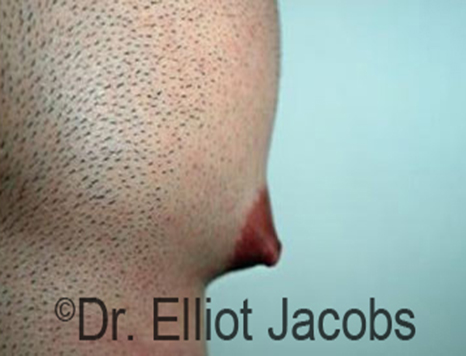
Puffy nipples may be described as an areola (the pigmented skin surrounding the actual nipple) that is elevated, like a round dome or tent, above the surrounding chest skin. When a snug T-shirt is worn, this condition may be extremely embarrassing. Young men are frequently teased about it, and some bullies will actually grab the puffy nipples and twist them, causing considerable pain and occasional bruising.
Boys will often hide their condition by wearing several layers of shirts or hunching over. They will avoid many activities (swimming, skins vs shirts basketball, etc.) which require them to be topless. The good news is that puffy nipples can be permanently cured – but it does require surgery.
Puffy nipples very rarely exist alone. Usually, they are found in combination with some amount of excess tissue, consisting of a combination of fat and breast tissue (i.e., gynecomastia), of the entire chest. Surgery for gynecomastia will always include treatment of the puffy nipples, too.
What Causes a Puffy Nipple?
The cause of a puffy nipple is solid breast tissue that is concentrated beneath it and pushes the tissues upward. Fat alone simply cannot cause a puffy nipple. Some patients try to feel for lumps to determine how much, if any, breast tissue is present. This is misleading because breast tissue itself may feel soft, and sometimes fat may feel firm. The best means to self-diagnose the condition is to lie on a flat surface and look down at your chest. If the areolas protrude above the level of the surrounding chest skin, then you have puffy nipples.
Sometimes the nipple may appear normal and not puffy. This is due to the temporary tightening of tiny muscle fibers within the areolar skin itself. When these fibers tighten, the areola temporarily diminishes in diameter and pushes the tissues deeper into the breast, thereby producing a flatter appearance. What causes this? Anything that stimulates the nipples, such as touch, emotional or erotic stimulation, or exposure to a cold environment. Unfortunately, these changes are temporary, and when those small muscle fibers relax, the puffiness returns.
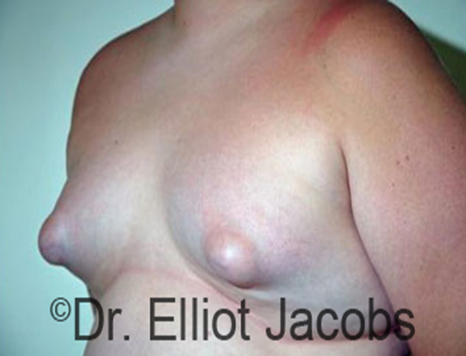
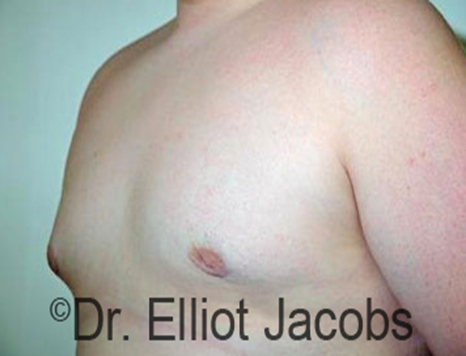
Other Nipple Conditions
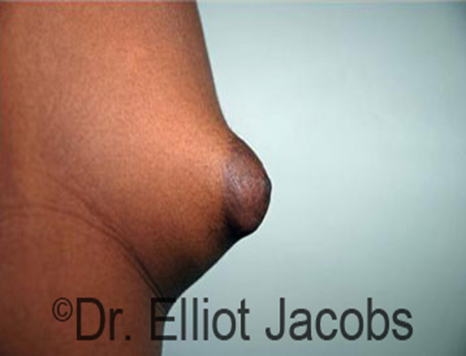
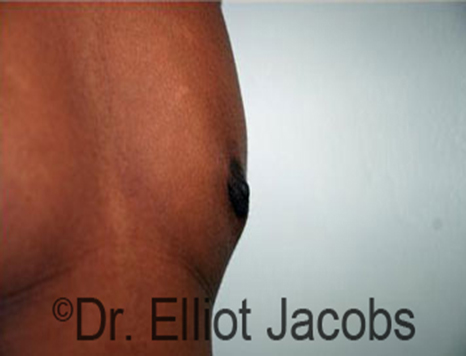
Protruding Nipples
Sometimes there has been insufficient removal of breast tissue beneath the nipple, and it remains to protrude after the initial surgery. This can occur if only liposuction has been performed or if excision was performed, but insufficient tissue was removed. Revision gynecomastia surgery for this situation will consist of the removal of the residual excess tissues so that the nipple will lie smooth and flush with the surrounding skin. It is important, though, for enough tissue under the nipple to be retained to prevent a crater deformity.
Inverted Nipples
Inversion of a previously normal nipple can occur after gynecomastia surgery. This tethering of the nipple to underlying structures is due to scar adherence. Revision surgery to correct this problem will require surgical release of the tether and then placement of some form of fat tissue (graft or flap) between the nipple and the underlying tissue to serve as a “spacer” so that the problem does not recur.
Nipple Lump Treatment
Some patients consult for gynecomastia revision surgery because they can “feel” something under their nipples even though their chest contours are excellent. One must understand that this surgery is basically directed to providing excellent chest contours – ie, a visual result. In 100% of cases, there will absolutely be residual scar tissue under the skin and nipples – that is the normal way in which the body heals – and that tissue may feel firm. There is nothing to be gained by trying to reduce these scar tissues with cortisone – it may induce an unwanted crater deformity. After all, this is not surgery performed so that one can invite another to feel one’s nipple to see if there is anything there.
How Are Puffy Nipples Treated?
Surgical removal of the excess breast tissue beneath the areola is the only permanent treatment. There are no other treatments that work – not Botox, creams, massage, injections, hormones, etc. Surgery to treat puffy nipples is tricky. If too much breast tissue is removed, it can create a crater deformity (where the areolas cave inwards).
If too little breast tissue is removed, the puffiness will remain after surgery. Just as important, the skin surrounding the areolas must be undermined and loosened so that the entire skin/areolar area will redistribute itself. If this is not done, the puffiness will recur even if breast tissue has been adequately removed because the skin has nowhere to go and just bunches up again.
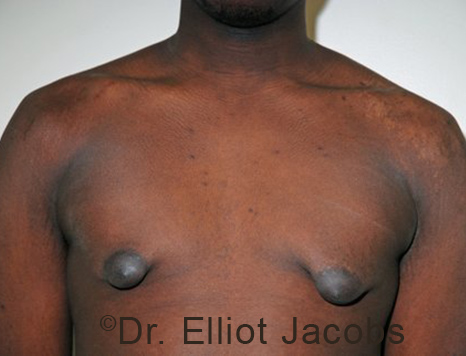
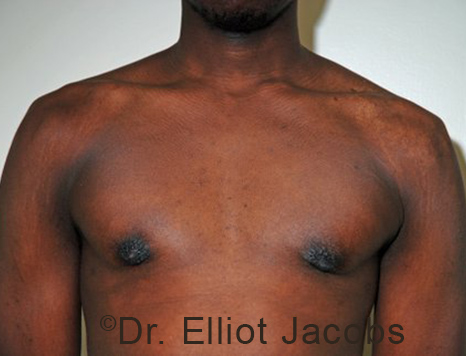
Puffy Nipple Before and After Gallery
View our photo gallery full of patient before & after photos.
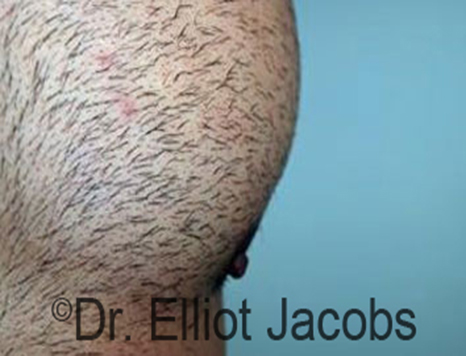
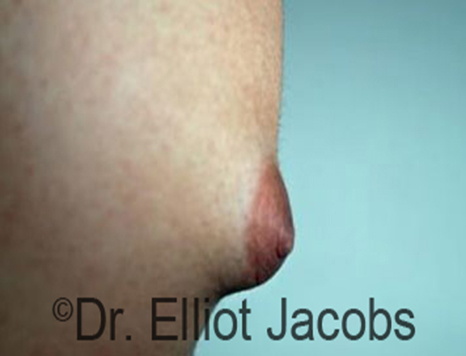
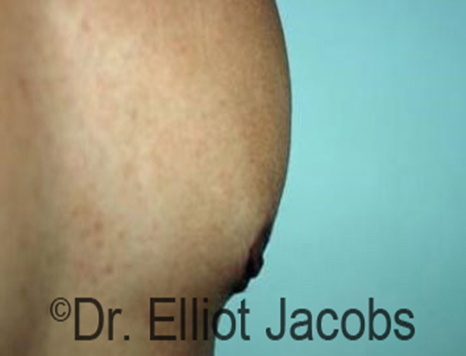
Ideal Candidates for Puffy Nipples Gynecomastia Surgery
A thorough consultation is needed in order to confirm whether you are a suitable candidate for gynecomastia surgery. The criteria include:

General good health

No medication or medical conditions that may impede surgery or recovery

A healthy lifestyle

Realistic expectations
What to Expect from Recovery
Dr. Jacobs provides his patients with a specific set of instructions to follow during the recovery period. Careful adherence to these instructions will help ensure a positive outcome after the surgery.


Benefits of Nipple Reduction Surgery
- Immediate and permanent flattening of the areolas after surgery
- Areolas lie flat and flush with the surrounding chest skin
- Clothes fit better
- Improved confidence and self-esteem
Risks of Puffy Nipple Surgery
All surgical procedures present the possibility of risks and side effects. The risks are minimized when puffy nipple surgery is performed by a surgeon specializing in gynecomastia surgery. Possible risks and side effects include soreness, infection, and asymmetry.


Why Choose Dr. Jacobs for Puffy Nipple Reduction?
Dr. Elliot Jacobs is an award-winning, advanced-trained aesthetic plastic surgeon with a specialization in male gynecomastia surgery. His puffy nipple surgery delivers consistently pleasing results. Contact his office and book your consultation to learn more about how he can help you.
Contact UsContact Us
Reach out to Dr. Jacobs today to schedule your consultation!
FAQ

Can puffy nipples go away on their own?
In adolescents, mild puffiness related to puberty may resolve over time. However, persistent puffy nipples caused by underlying breast tissue rarely improve without surgery. In adults, spontaneous resolution is extremely unlikely.
What Are Enlarged Nipples and Areolas?
Enlarged nipples are usually caused by a protruding nipple stalk (hypertrophic nipples) and can be corrected by reducing nipple height with small incisions and dissolvable sutures. Puffy nipples and hypertrophic nipples may occur together and can be treated at the same time.
Enlarged areolas may occur with gynecomastia even without nipple protrusion. Normal male areolas measure 2.5–3.5 cm (1–1.5 inches). Larger areolas often shrink naturally after gynecomastia tissue removal, so direct areola reduction is usually delayed for at least six months. If still needed, reduction creates a permanent circumferential scar and may widen over time.
Why See a Gynecomastia Specialist?
Gynecomastia surgery is complex and highly individualized. Specialists treat significantly more cases and are better equipped to manage challenges like puffy nipples, where tissue removal must be carefully balanced with fat support to avoid depressions or recurrent protrusion.
At what age can puffy nipple surgery be performed?
Surgery may be considered in teenagers once the condition is stable and unlikely to resolve naturally, typically after puberty has progressed. Each case is evaluated individually during consultation, especially in younger patients.
Will there be visible scars after puffy nipple reduction?
Incisions are usually placed along the edge of the areola, where scars heal discreetly and blend well over time. In most patients, scarring becomes difficult to detect once healing is complete.
Can puffy nipples come back after surgery?
When glandular tissue is properly removed and skin is adequately released, recurrence is uncommon. Choosing a surgeon experienced in gynecomastia surgery significantly reduces this risk.
Does weight gain affect surgical results?
Moderate weight changes generally do not reverse results. However, significant weight gain can increase chest fat, which may affect overall contour, though it does not recreate true puffy nipples caused by glandular tissue.